Past Event
Whitechapel Gallery is committed to making all of our exhibitions as accessible as possible for every visitor. Please contact access@whitechapelgallery.org if you would like to discuss a particular request and we will gladly discuss with you the best way to accommodate it.
For complete access information about the gallery, please visit here.
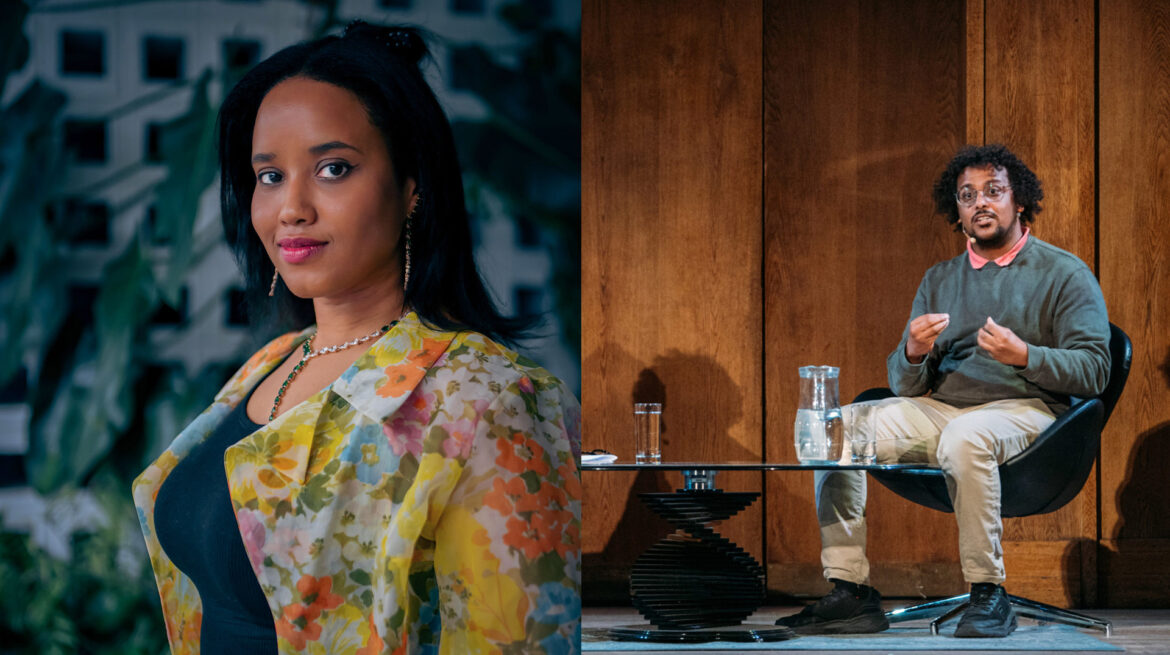
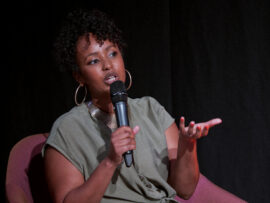
Across East Africa, the climate crisis is not an abstract future but a lived reality, reshaping land, livelihoods and migration. In this conversation, Layla Mahmood, East Africa Correspondent for The Observer, shares insights from reporting on the ground, reflecting on the stories and climate conversations that have emerged from East Africa with Mohammed Elnaiem, Director of The Decolonial Centre.
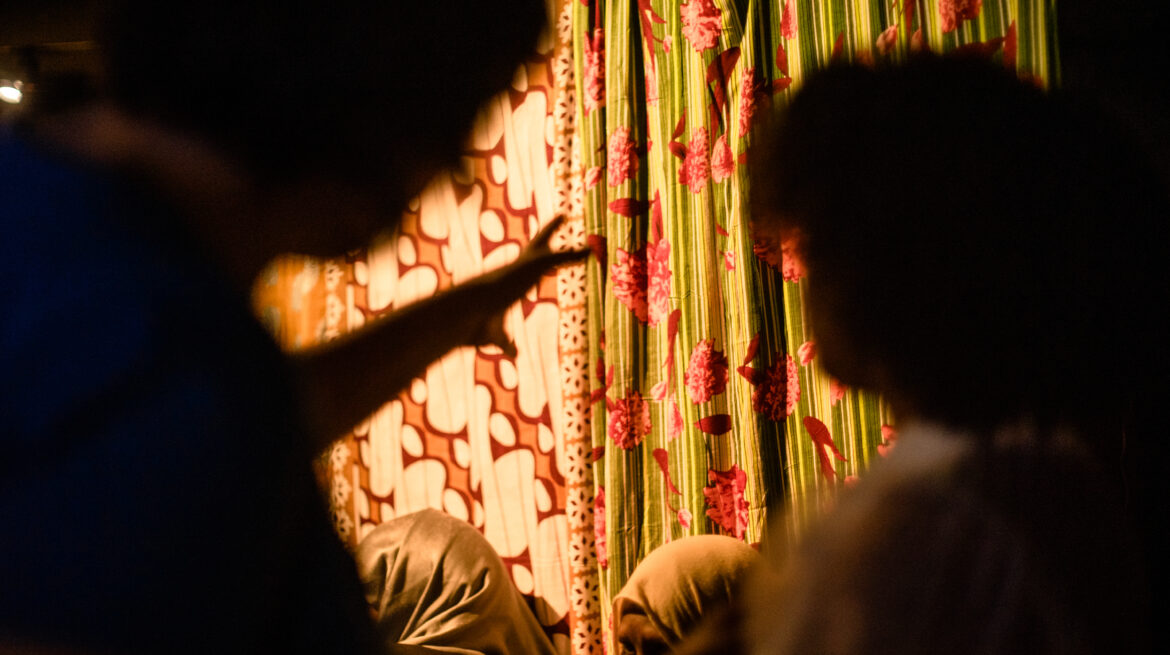
Taking Fozia Ismail’s A Song for the Xeedho as a starting point, the event considers what disappearing ecologies mean for nomadic life, oral tradition and ways of knowing rooted in land, movement and interdependence. Join us for a discussion on climate, power, colonial legacies and who gets to narrate environmental change.
A Song for the Xeedho – The Knot Makers is co-commisioned by Counterpoints Arts and Whitechapel Gallery.
This event is part of Backyard Biennial.
Layla Mahmood is a journalist, reporter and East Africa Correspondent for The Observer. Her work spans climate, politics, culture and social justice. She has worked with The Guardian and the BBC, with a focus on investigative and people-led reporting that traces how political decisions are felt in everyday life. Her journalism has explored social and political issues across East Africa and the wider diaspora, alongside cultural writing for publications including Glamour and Subbacultcha!. Layla has also worked as a producer and writer with Fully Focused Productions and Million Youth Media, supporting storytelling rooted in lived experience and youth perspectives.
Mohammed Elnaiem is Director of The Decolonial Centre. He is an activist, and also working on a Ph.D. in Sociology at Trinity Hall, Cambridge, where he is writing a dissertation on the relationship between capitalism, colonialism and patriarchy.
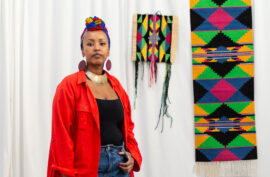
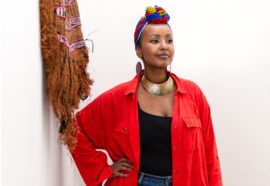
Fozia Ismail is a British Somali artist, founder of Arawelo Eats and co-founder of dhaqan collective. Her practice moves across food, sound, textiles and found objects to create works exploring migration, climate, identity and diasporic memory.
Rooted in Somali nomadic feminist pedagogy, her work approaches everyday cultural practices as living archives of care, knowledge and survival. Through collective acts of listening, eating, weaving and making, she reframes domestic and communal space as sites of shared authorship. Central to her practice are inherited materials and objects connected to her mother’s Somali nomadic roots – vessels, spices, textiles, cassette tapes and sound recordings, which she transforms into sculptural, time-based and archival works.
Ismail has exhibited internationally at the British Textile Biennale, Southbank Centre, Biennale Architettura Venice, Weltmuseum Wien, Playable Cities, Osaka and Jodhpur Art Week.
A Song for the Xeedho – the Knot Makers is supported by Counterpoints Arts and Arts Council England.