Free entry
Thu 3 Sep & Fri 4 Sep
Off Site
| Monday | Closed |
| Tuesday | 11am–6pm |
| Wednesday | 11am–6pm |
| Thursday | 11am–9pm |
| Friday | 11am–6pm |
| Saturday | 11am–6pm |
| Sunday | 11am–6pm |
Whitechapel Gallery is committed to making all of our exhibitions as accessible as possible for every visitor. Please contact access@whitechapelgallery.org if you would like to discuss a particular request and we will gladly discuss with you the best way to accommodate it.
For complete access information about the gallery, please visit here.
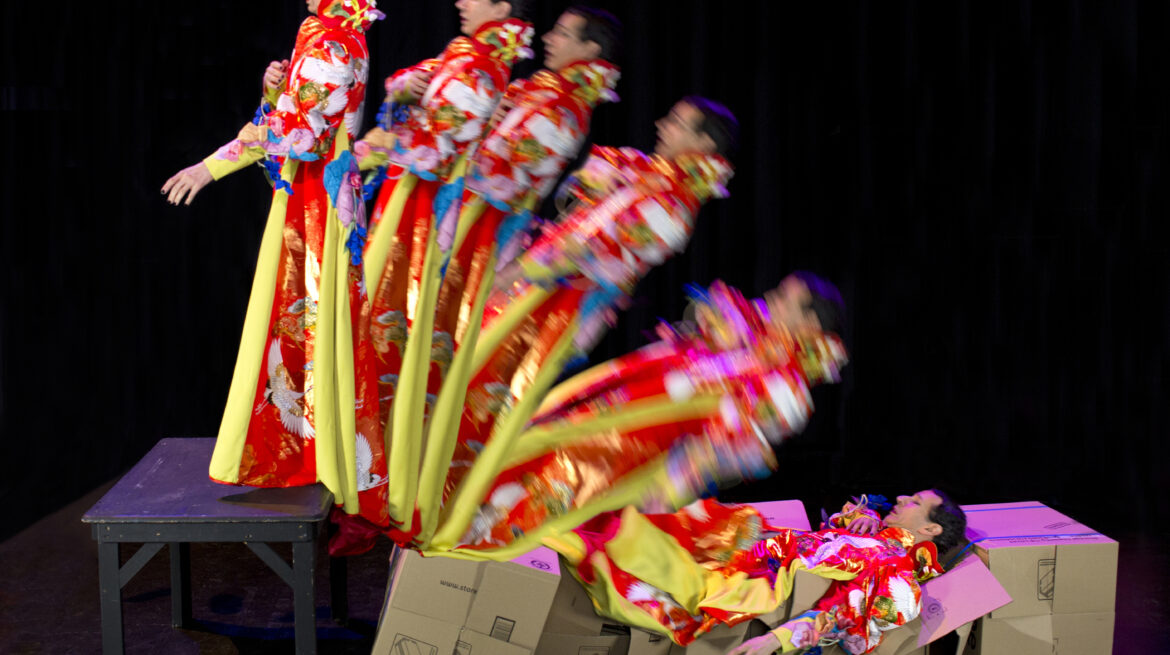
TransMigration is a new durational performance by performance artist Nando Messias.
Over two days, Messias personally migrates their archive from the Museum of Transology at the Bishopsgate Institute to Whitechapel Gallery.
Messias’ archive is an incredible collection of costumes, props, makeup, perfume, journals and papers accumulated over twenty years.
This event is part of Backyard Biennial.
Nando Messias is a performer who is trans-disciplinary and resistant to easy categorisation. Messias’ work deliberately blurs the lines of form, centring the trans/non-binary, excluded and oppressed body—a body for which they have had to make room for in the world. Messias has performed in different spaces: nightclubs, theatres, art galleries and the streets. Messias’ practice is rooted in their personal experience of being in the world, offering critical responses to the violence, transphobia and other forms of discrimination and exclusion they have experienced as a trans/non-binary, ageing immigrant. Despite the political and ethical foreground to their performances, the work is distinctive in its engagement with radical beauty, awe, rigour, glamour and fierceness— all inflected with a dash of humour. Recently, Messias has been focusing their attention on trans archives, and turned towards a more sculptural engagement with the body in its relation to discourses around identity and historicity.
Founded in 2014, the Museum of Transology collects objects donated by trans, non-binary and intersex people that share our gender stories. Each object has a handwritten label attached explaining its personal significance to the donor.
The collection has been built through community collecting events, catalogued in community archiving workshops across the UK and Ireland and online and used to stage community exhibitions. Thousands of people have taken part in building the museum together, donating objects, travelling far and wide to collect, writing up collections metadata, transcribing 1000s of tags, helping to document the collection and its condition, and by building exhibitions using reclaimed and recycled materials.
Together our collection forms a record of trans culture, activism and everyday life, ensuring that our stories are preserved for future genderations. And yes, we’re still collecting.