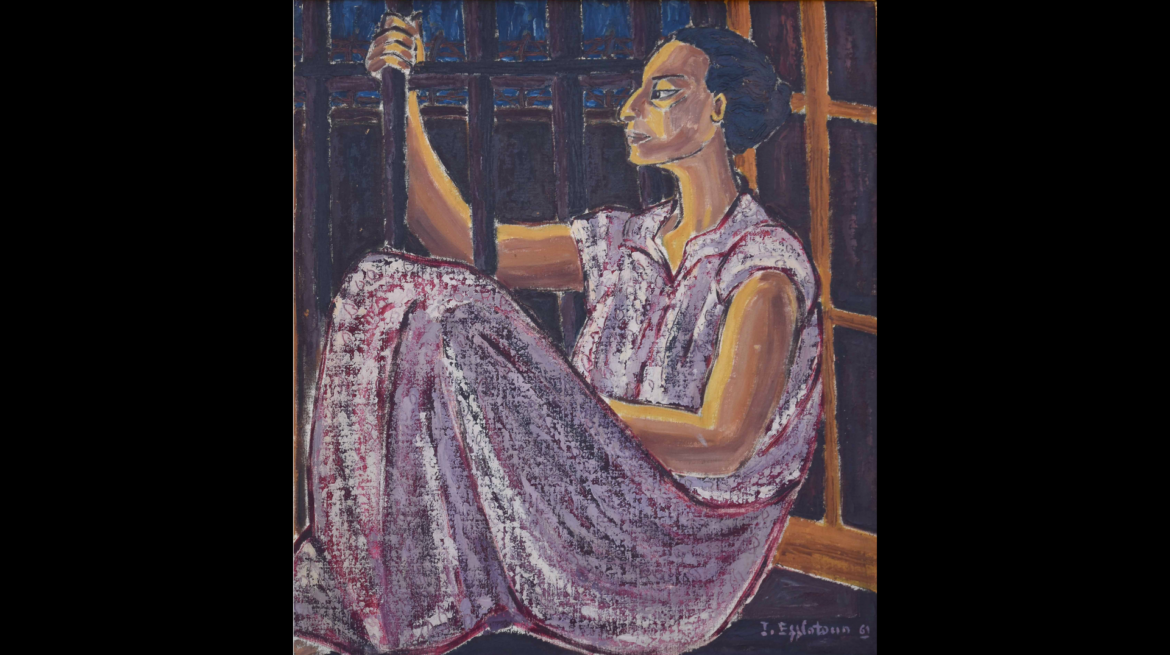
Inji Efflatoun, Dreams of the Detainee, 1961. Oil on canvas, 50 x 40 cm. Courtesy Hassan Mahmoud Galal el-Din. Image courtesy Barjeel Art Foundation, Sharjah
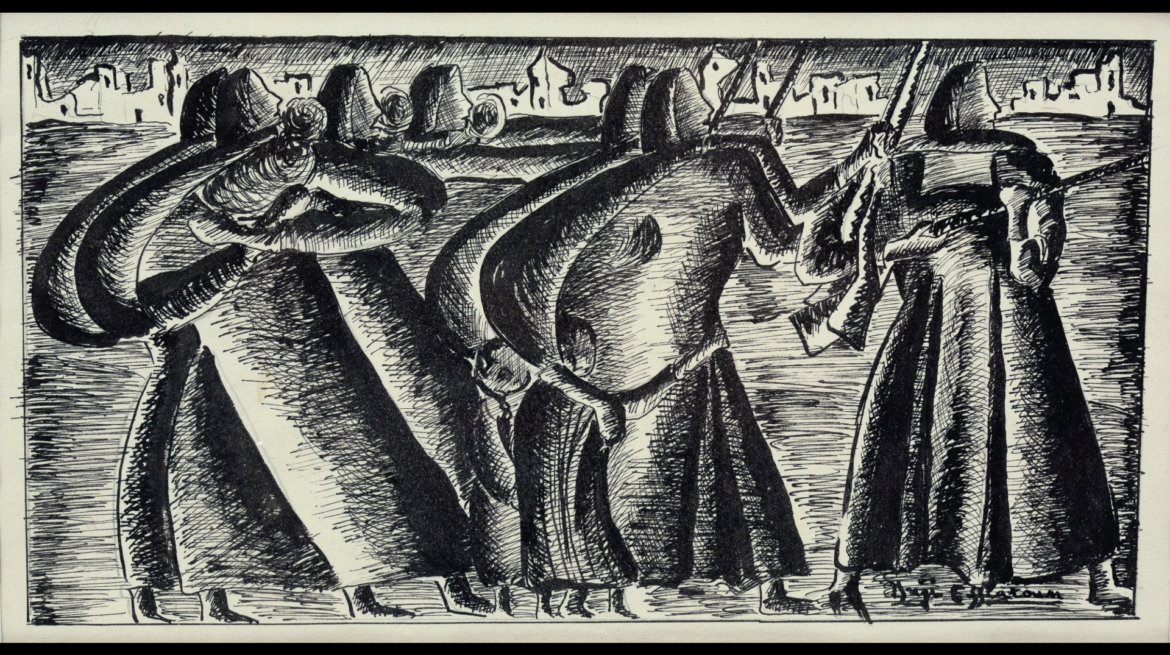
Inji Efflatoun, Tarqab (Expectation), c. 1940s. Ink on paper. 12 x 21 cm. Courtesy Hassan Mahmoud Galal el-Din. Image courtesy Barjeel Art Foundation, Sharjah
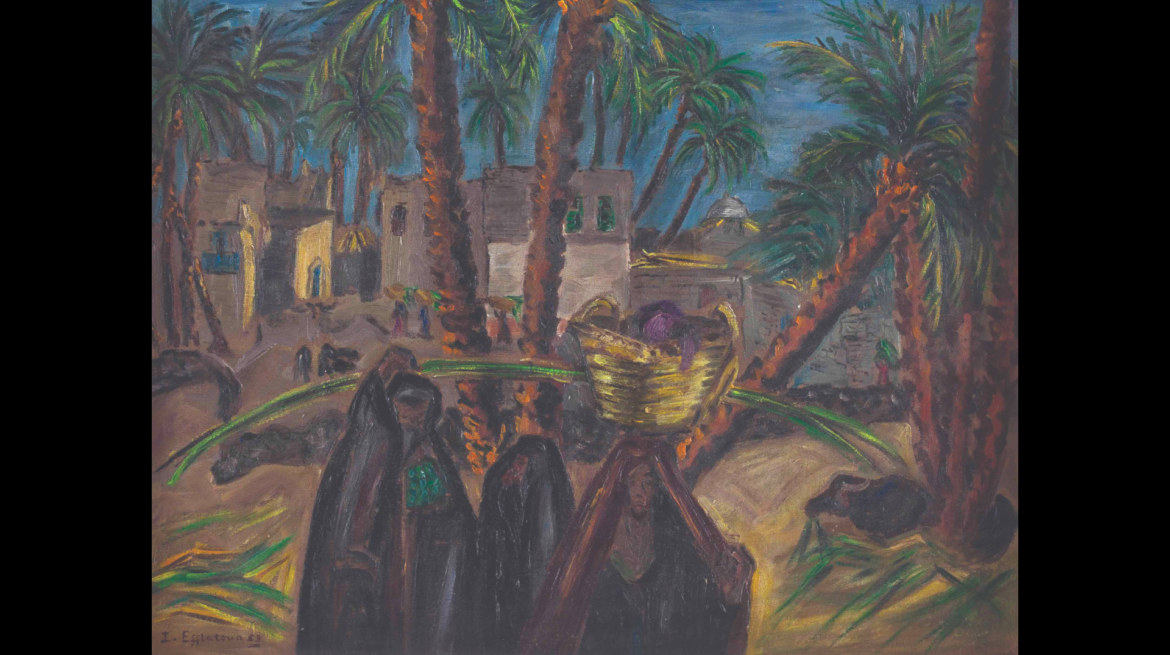
Inji Efflatoun, Farm (Ezba), 1953. Oil on board. 47 x 63 cm. Courtesy Hassan Mahmoud Galal el-Din. Image courtesy Barjeel Art Foundation, Sharjah
7 Oct 2026 - 14 Feb 2027
| Monday | Closed |
| Tuesday | 11am–6pm |
| Wednesday | 11am–6pm |
| Thursday | 11am–9pm |
| Friday | 11am–6pm |
| Saturday | 11am–6pm |
| Sunday | 11am–6pm |
This special presentation, curated by Gilane Tawadros and Salah M. Hassan, marks the first significant UK exhibition of Inji Efflatoun (1924 – 1989 Cairo, Egypt), one of the most important Egyptian artists of the twentieth century. A feminist and political dissident, Efflatoun regarded art as a powerful tool for social justice and political expression and her activism and artistic practice were deeply entwined.
Born into an affluent Cairo family in 1924, Efflatoun rejected the privileges of her upbringing and became deeply involved in politics from an early age, having been introduced to Marxism while still at school. Efflatoun started painting while young, and from the age of fifteen, studied under the revolutionary artist and filmmaker Kamel El-Telmissany – one of the founders of the radical left-wing Egyptian Surrealists movement, ‘Art et Liberté’, which she later joined.
Throughout her life, Efflatoun was highly active in anti-colonial movements against Egypt’s occupation by Britain, advocated passionately for Egyptian women’s rights and campaigned for the rights of ordinary working people. In 1959, because of her political affiliations, Efflatoun was imprisoned by the Nasser regime and remained incarcerated for more than four years. Despite severe restrictions, she continued to paint in prison. The landscapes and studies she produced during this period are among the most celebrated works of her career and transformed her approach to light, colour and technique.
Weaving together the artistic, personal and political Inji Efflatoun: The Poetics of Justice traces the trajectory of Efflatoun’s simultaneous development as an artist and political activist across five decades. It brings together key works from across her career, including the acclaimed series made while she was imprisoned, alongside drawings and rare archival documents and photographs. Together they provide a fascinating insight into Efflatoun’s life and career during a key period in Egypt’s transition from British occupation to independence and post-independence.
Inji Efflatoun: The Poetics of Justice is presented in partnership with the Sharjah Art Museum and Global Studies University, Sharjah, UAE.
Read the full press release here.
Born in Cairo in 1924, Inji Efflatoun was educated at the Collège du Sacré-Cœur before joining the Lycée Français where she developed an interest in literature and political history. She was one of the first women to attend the Faculty of Arts at Cairo University and from 1940, she studied under the painter and filmmaker Kamel El-Telmissany. El-Telmissany introduced Efflatoun to the surrealist group Art and Liberty founded in 1938 by writer Georges Henein.
Efflatoun was an engaged feminist and political activist as well as an artist. In 1942, she joined the Egyptian Communist organisation Iskra (al-sharara) and in 1945 she was one of the founding members of the ‘Ligue des jeunes femmes des universités et des instituts’ (League of Young Women in Universities and Institutes). She published several political pamphlets including 80 Million Women With Us (1948) and We Egyptian Women (1949). After she met intellectual and feminist Saiza Nabarawi in 1950, Efflatoun joined the Youth Committee of the Egyptian Feminist Union. In 1951, she participated with Nabarawi and other female activists in the organisation of the Women’s Committee for Popular Resistance. In March 1959, Efflatoun was arrested and jailed together with twenty-five female political activists. She was released in July 1963 after organising the first women prisoners’ strike. In 1985, she was appointed Chevalier dans l’Ordre des Arts et des Lettres by the French Ministry of Culture. She continued painting until her death in 1989.
Efflatoun had her first solo exhibition at the A.D.A.M. Gallery in Cairo (1952), and she participated in various biennials including the São Paulo Biennial (1953), the Alexandria Biennial (1961 and 1965) and the Venice Biennale (1968). She had additional solo presentations in Rome, Paris, Berlin, Moscow, Prague, Kuwait and India. Recent selected group exhibitions include Project a Black Planet: The Art and Culture of Panafrica, Barbican, London (2026); Surrealism Beyond Borders, The Metropolitan Museum of Art, New York (2021-22); When Art Becomes Liberty: The Egyptian Surrealists (1938-1965), Palace of Arts, Cairo (2017); Art et Liberté: Rupture, War and Surrealism in Egypt (1938-1948), Centre Pompidou, Paris (2016); Focus: Works from Mathaf Collection, Mathaf: Arab Museum of Modern Art, Doha (2015–2016); and Forces of Change: Artists of the Arab World, National Museum of Women in the Arts, Washington, DC (1994). Efflatoun’s work is included in the collections of the Amir Taz Palace, Cairo; Museum of Egyptian Modern Art, Cairo; Museum of Modern Art, Alexandria; Mathaf: Arab Museum of Modern Art, Doha; The Dubai Collection, Dubai; Barjeel Foundation, Sharjah; The Ramzi & Saeda Dalloul Art Foundation, Beirut; Jordan National Gallery of Fine Arts, Amman; Moscow’s State Museum of Oriental Art, Moscow; and private collections around the world.
Inji Efflatoun: The Poetics of Justice has been generously supported by:
Inji Efflatoun Exhibition Circle and Patrons:
Sotheby’s, The Abdalla Foundation, Dounia Nadar, Mary Habib and Bishoy Azmy, Soliman Travel. Jane Soliman.
Whitechapel Gallery is a registered charity No. 312162