Past Exhibition
As part of Backyard Biennial, a specially curated selection of films from the last five decades by pioneering and influential artist John Smith will be screened each day. Rooted in everyday life and personal experience, the films in the programme revolve around places and events in Smith’s native East London. Taking the world around us as their starting point, his genre-defying works playfully explore and expose the language of cinema, challenging distinctions between documentary, fiction, representation and abstraction.
** Please note this programme will not be screening on Fri 7 Aug and Sat 8 Aug **
Screenings take place at 4.30pm Tuesday to Sunday, and at 4pm, 5.15pm and 7pm on Thursdays. The duration of the programme is 75 minutes.
Record (2021) 1 minute
The Black Tower (1985-87) 23 minutes
Blight (1994-96) 14 minutes
Dad’s Stick (2012) 3 minutes
Twice (2020) 3 minutes
Lost Sound (1998-2001) 28 minutes
A larger-than-life portrait of the late Queen’s husband, His Royal Highness the Duke of Edinburgh, recorded at the University of East London in 2002. The footage sat on the artist’s shelf for 19 years before the video was eventually completed on the day of Prince Philip’s death, 9 April 2021.
The film alternates between conventional storytelling and visual abstraction, incorporating colour fields that slowly transform into representational images. The Black Tower builds a psychological bond between narrator and viewer, while repeatedly disrupting illusion by foregrounding its own construction. An offscreen voice introduces a man haunted by a tower that seems to follow him around London. Both humorous and unsettling, the narrative steadily escalates into a scenario in which the protagonist loses the ability to distinguish between reality and the paranormal. Blending elements of psychological horror, dark humour, and structural film, the 23-minute piece explores themes of urban alienation, perception and madness through a meticulously controlled layout of images and sound.
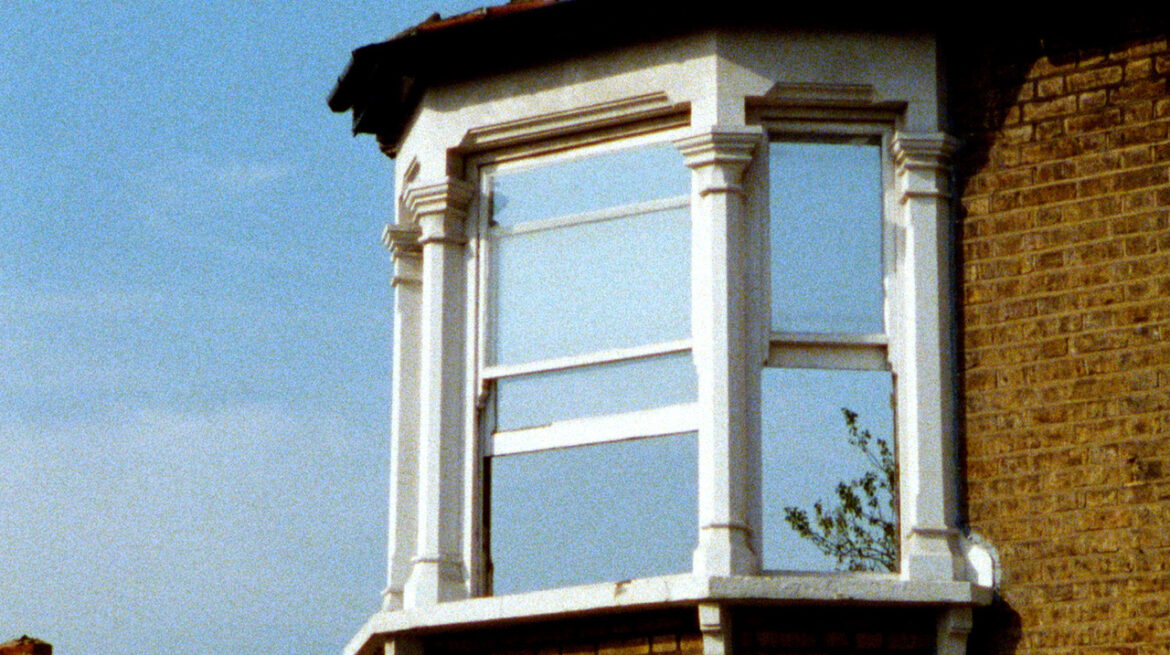
Blight was made in collaboration with the composer Jocelyn Pook. It revolves around the construction of the M11 Link Road in East London, which provoked a long and bitter campaign by residents seeking to protect their homes from demolition. The film records changes that occurred in the area over a two-year period, from the demolition of houses through to the start of motorway construction. The soundtrack combines environmental sounds associated with these events with speech fragments taken from recorded conversations with local people. Addressing themes of memory and loss, the film creates links between unconnected fragments of sound and image, bringing together disparate reminiscences and contemporary events. Blight exploits the ambiguities of its material to produce new meanings and metaphors, fictionalizing reality through framing and editing strategies.
Dad’s Stick features three well-used objects that were shown to the artist by his father shortly before he died. Two of these were so steeped in history that their original forms and functions were almost completely obscured. The third object seemed to be instantly recognizable, but it turned out to be something else entirely. Smith pays homage to his late father by showcasing these ambiguous artefacts to examine the texture of memory and the things people leave behind. Focusing on events relating to their history, Dad’s Stick creates a dialogue between abstraction and literal meaning, while hinting at the character of a ‘perfectionist with a steady hand’.
Self-isolating at home in Hackney during the COVID-19 lockdown, the artist follows Prime Minister Boris Johnson’s advice.
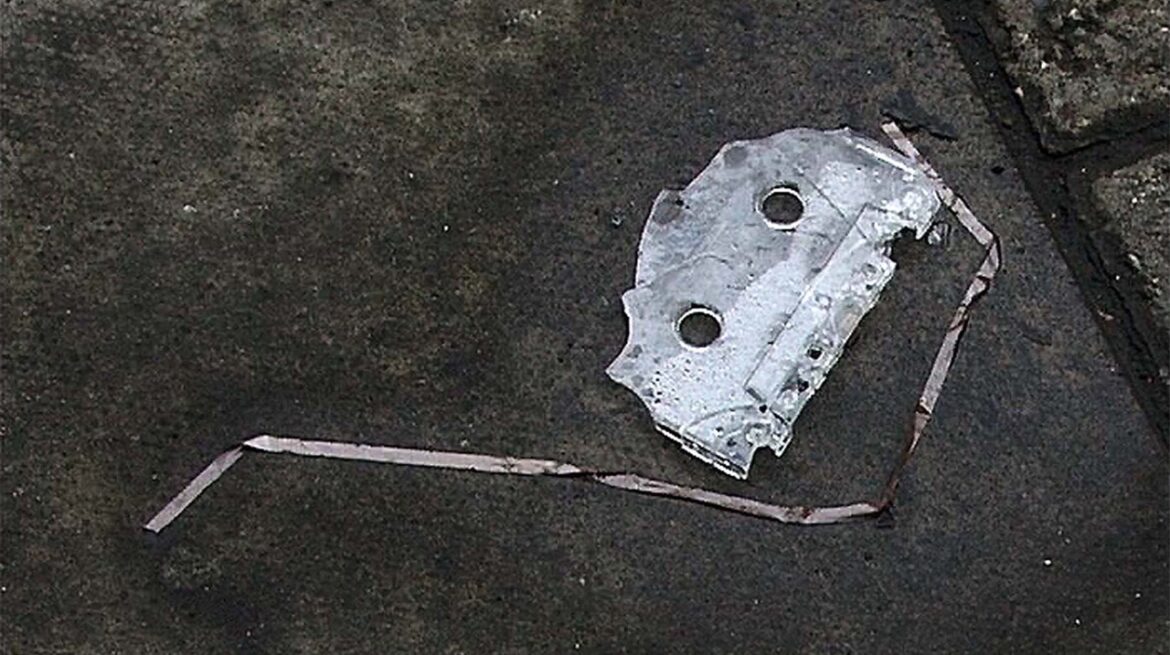
Lost Sound was a collaboration with artist and composer Graeme Miller. It documents fragments of discarded audio tape found on the streets of Tower Hamlets and Hackney, combining the sound retrieved from each piece of tape with images of the place where it was found – winding around iron clad fences, nestled in patches of grass, lying in gutter-water puddles. The work explores the potential of chance, creating portraits of particular places by building formal, narrative and musical connections between images and sounds linked by the random discovery of the tape samples. What at first seems like a series of straightforward episodes documenting urban life emerges as a complex, intricate discourse between environment and viewer. ‘Lost Sound depicts the city as a disparate and fragmented series of personal histories. A sense of migration, loss and displacement seeps through upbeat soundtracks from sunnier climes’ – Helen Legg, exhibition ‘John Smith’, Ikon Gallery, Birmingham 2006.
John Smith was born in Walthamstow, London in 1952 and lives and works in Hackney. He studied at North-East London Polytechnic and the Royal College of Art before becoming an active member of the London Filmmakers Co-op. Influenced in his formative years by conceptual art and structural film, but also fascinated by the immersive power of narrative and the spoken word, Smith has developed an extensive and varied body of work.
Since 1972 Smith has made over 60 film, video and installation works that have been shown in galleries and independent cinemas around the world. His work has received major prizes at numerous international film festivals, and retrospectives of his films have been presented in 16 countries. He received a Paul Hamlyn Foundation Award for Artists in 2011 and in 2013 he was the winner of Film London’s Jarman Award. In 2026 his film ’Being John Smith’ was a finalist for the European Film Academy Short Film Award.
Institutional solo exhibitions include Secession, Vienna (2025); Kunstmuseum Magdeburg (2022); Museum of Contemporary Art, Leipzig (2015); Centre d’Art Contemporain de Noisy-le-Sec, Paris (2014); Kestnergesellschaft, Hanover (2012); Weserburg Museum of Modern Art, Bremen (2012); Turner Contemporary, Margate (2012); Uppsala Art Museum (2011); Royal College of Art Galleries, London (2010) and Ikon Gallery, Birmingham (2006).
Recent group exhibitions include ‘Ways of Seeing’, Muzeum Sztuki, Lodz (2025, ongoing); ‘Life After Life’, 15th Kaunas Biennial, Lithuania (2025); ‘We Saw an Endless Cycle’, Hayy Jameel, Jedda (2024); ‘Walk This Way’, Kunstmuseum Ravensburg (2024); ‘Small World: 13th Taipei Biennial’ (2023); ‘Life Is More Important Than Art, That’s Why Art Is Important’, Whitechapel Gallery, London (2023); ‘Street Life’, Wilhelm-Hack-Museum, Ludwigshafen am Rhein, Germany (2022); ‘Instantly! Vienna Street Photography’, Museen der Stadt Wien, Vienna (2022); ‘Atlas of Modernity: Exercises’, Muzeum Sztuki, Lodz (2021); ‘Le Cours des Choses’, Musee d’Art Contemporain de Bordeaux (2020); ‘Migrating Worlds: The Art of the Moving Image in Britain’, Yale Centre for British Art, Connecticut (2019).
John Smith’s films are in the public collections of Tate, Arts Council England, Museum of Modern Art New York, FRAC Île de France, Kunstmuseum Magdeburg, Ville de Genève and Muzeum Sztuki, Lodz. Smith is Emeritus Professor of Fine Art at University of East London.
Backyard Biennial has been generously supported by:
Aldgate Connect BID