Past Event
Access requirements
Whitechapel Gallery is committed to making all of our events as accessible as possible for every audience member. Please contact access@whitechapelgallery.org if you would like to discuss a particular request and we will gladly discuss with you the best way to accommodate it.
Information about access on site at the gallery is available here https://www.whitechapelgallery.org/visit/access/
This includes information about Lift access; Borrowing wheelchairs & seating; Assistance Animals; Parking;
Toilets and baby care facilities; Blind & Partially Sighted Visitors; Subtitles and transcripts; British Sign Language (BSL) and hearing induction loops; Deaf Messaging Service (DMS).
About This Event
This event takes place in Assembly Room at Whitechapel Gallery, located on the ground floor.
This talk lasts approximately 1.5 hours. Attendees are encouraged to take as many breaks as they need during the event.
You must book a ticket to attend the event.
If the ticket price affects your attendance, please email tickets@whitechapelgallery.org to be added to the guest list (no questions asked, but dependent on availability).
This event is suitable for those over the age of 16
We are unable to provide British Sign Language interpretation for this event
We are unable to provide live closed captioning or CART for this event.
An audio recording of the event can be obtained by emailing publicprogrammes@whitechapelgallery.org following the event.
Transport
To the best of our knowledge, there are no planned disruptions to local transport on the date of the event.
Our nearest train station – Aldgate East Underground (1 min) is not wheelchair accessible. The closest wheelchair accessible stations are Whitechapel (15 min), Shoreditch High Street (15 min) or Liverpool Street (15 min).
Free parking for Blue Badge holders is available at the top of Osborn Street in the pay and display booths for an unlimited period. Spaces are available on a first come, first served basis.
This event is now fully booked. Please contact infodesk@whitechapelgallery.org or call +44 (0)20 7522 7888 to be added to the waitlist.
Join artists, photographers, and leading voices in the field for a conversation on the politics and possibilities of photography today. Using Joy Gregory: Catching Flies with Honey as a point of departure, the discussion will examine how the medium continues to challenge ideas of art, beauty, identity and power.
Chaired by Diane Smyth, Editor of British Journal of Photography, with contributions from Joy Gregory, Heather Agyepong, and Eileen Perrier, the panel will explore Gregory’s impact on contemporary practice and the ongoing potential of photography as a tool for experimentation and critical reflection.
Attendees to this event can access an exclusive 20% discount on the exhibition catalogue Joy Gregory: Catching Flies with Honey – a richly illustrated monograph surveying Gregory’s forty-year career, with essays by leading scholars who situate her practice as a vital contribution to global discourses on race, gender and the politics of seeing.
To redeem this discount, please select the “Admission + Book” option when purchasing your ticket – your Reader will be available to collect from the info desk on the night of the event.
This event is organised in collaboration with the British Journal of Photography.
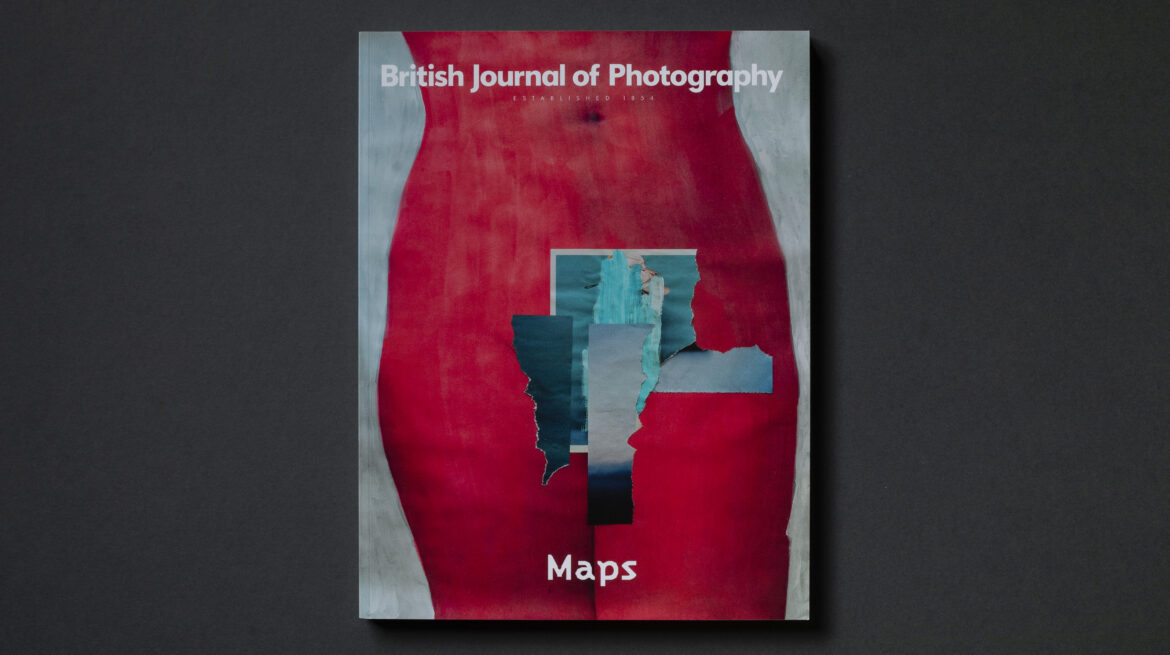
British Journal of Photography, the world’s longest-running photography title, has been showcasing pioneers of the medium since 1854. Through the lenses of world-class photographers, British Journal of Photography explores rich and timely stories of art, culture, politics and society. Explore BJP’s award-winning photographic journalism online, via 1854.photography, and through the pages of its themed bimonthly print publication. Past themes have included Virtual Reality, Work, Maps, Portrait and the annual talent issue: Ones to Watch.
British Journal of Photography is printed quarterly, each issue including 196 pages of three different paper types. The content is standardised across regular editorial sections: Agenda, Projects, In the Studio, Features and Intelligence. It includes a range of long-form, exclusive interviews with esteemed photographers, curators and industry experts, opinion- led pieces and portfolios, as well as short reviews and accessible quick reads.
Joy Gregory is a graduate of Manchester Polytechnic and the Royal College of Art. She has developed a practice which is concerned with social and political issues with particular reference to history and cultural differences in contemporary society.
As a photographer she makes full use of the media from video, digital and analogue photography to Victorian print processes. In 2002, Gregory received the NESTA Fellowship, which enabled her the time and the freedom to research for a major piece around language endangerment. The first of this series was the video piece Gomera, which premiered at the Sydney Biennale in May 2010.
She is the recipient of numerous awards and has exhibited all over the world showing in many festivals and biennales. Her work included in many collections including the UK Arts Council Collection, Victoria and Albert Museum, Institute of Modern Art, Brisbane, Australia, and Yale British Art Collection. She currently lives and works in London.
Heather Agyepong is a British Ghanaian visual artist and actor based in London. Her practice explores mental health and wellbeing, invisibility, the diaspora, and the archive, often combining lens-based media and performance to create cathartic experiences for both herself and her audiences. Through re-imagination, she engages with communities of interest while placing the self at the centre of her work.
Since 2009, Agyepong’s work has been published, performed, and exhibited across the UK and internationally. She has been nominated for the Prix Pictet and Paul Huf Award (2016, 2018, 2021), and her work is held in major collections including Autograph ABP, Arts Council England, The Hyman Collection, The Walther Collection, and the National Portrait Gallery. She has received commissions from organisations such as the Mayor of London, Photoworks, Artichoke, and Tate Exchange.
Alongside her visual practice, Agyepong is an acclaimed actor, previously an associate artist with Talawa Theatre Company. She continues to perform nationally and internationally and was recently nominated for an Olivier Award for Best Actress and the Stage West End Debut Award for Shifters (2025).
Diane Smyth is Editor of the British Journal of Photography and the Photoworks Annual. She also teaches History and Theory of Photography at the London College of Communications, University of the Arts London, and has given talks and workshops at institutions such as London School of Economics and King’s College London. Diane has written about photography for publications such as The Guardian, FOAM, Trigger, Apollo and The Art Newspaper, and contributed essays to many photography catalogues and monographs. She originally studied for a BA in English Language and Literature at the University of Birmingham, graduating with a First and the Tibbatt’s Memorial Prize. She also holds an MA in Modern Literatures in English from Birkbeck College, University of London.
Eileen Perrier is a London-based photographer whose practice spans personal projects and commissioned work, with a sustained focus on portraiture and documentary photography. Born and raised in London to Ghanaian and Dominican parents, her dual diasporic heritage informs her ongoing exploration of cultural identity, belonging, and representation. Her early practice was shaped by a first visit to Ghana in 1995. This experience was formative, grounding her sense of identity and reshaping her understanding of what it means to be a Londoner of dual heritage. Since then, Perrier has photographed and been commissioned to document a diverse range of sitters, often working in public spaces to explore lived experience and visibility. Her work has been widely exhibited internationally since 1999, including at The Photographers’ Gallery, Tate Britain, Whitechapel Gallery, and the touring exhibition Africa Remix at the Hayward Gallery and The Centre Pompidou, Paris. In 2025, she presented a solo retrospective at Autograph, and in 2024 her work featured in The Missing Thread: Untold Stories of Black British Fashion at Somerset House. Her work is held in public and private collections including Arts Council England, Tate, Autograph, the Foundling Museum, and Light Work. Perrier is also an educator and is currently an Associate Lecturer at London College of Communication, University of the Arts London.
Instagram: @eileen_perrier_projects